
10 Expert Tips for Four-Season Off-Grid Bathroom in 2026
The Hidden Cost of Perfection in Off-Grid Bathrooms
Remote Alaskan communities have learned the hard way that pursuing perfection in off-grid environments can backfire. Embracing adaptive obsolescence and design failures as strategic advantages has sparked a shift towards more practical approaches in four-season off-grid bathrooms. Communities in Canada and Scandinavia are now adopting modular designs that let users replace components without overhauling entire systems, a far cry from the traditional approach of creating infallible systems.
The key insight is that rigid, self-contained systems are vulnerable to single points of failure, whereas modular, adaptable designs thrive on controlled imperfections. AI-driven solutions in off-grid bathroom systems have shown promising results in enhancing community maintenance and resilience. For instance, integrating AI-driven maintenance systems enables real-time monitoring and predictive maintenance, reducing the likelihood of catastrophic failures.
Modular components have facilitated community-driven maintenance, empowering residents to take an active role in the upkeep of their off-grid bathroom systems. This shift towards community-driven innovation is significant in off-grid living, where sustainable technology and resilience are paramount. The adoption of adaptive obsolescence and design failures as design principles has also been influenced by the growing recognition of the importance of community engagement in off-grid systems.
Industry observers note that community-driven maintenance has several benefits, including reduced system failures and increased user satisfaction. The use of modular designs and AI-driven solutions has enabled off-grid communities to adapt more effectively to changing environmental conditions, such as extreme weather events. As the off-grid living sector evolves, we can expect a growing emphasis on adaptive obsolescence, design failures, and community-driven innovation.
Developing four-season off-grid bathrooms that can withstand extreme weather conditions while minimizing environmental impact will be crucial. By embracing sustainable technology and resilient design principles, off-grid communities can create bathroom systems that are functional, efficient, adaptable, and responsive to residents’ needs. A collaborative approach will be essential in addressing the complex challenges associated with off-grid living and creating a more sustainable and resilient future for off-grid communities.
How Planned Obsolescence Fuels AI Advancements in Bathroom Tech

Kohler’s ‘Enc’ toilet, launched in 2025, is a prime example of how planned obsolescence can accelerate innovation. Designed to last only five years before requiring software updates, the toilet forces users to engage with AI-driven maintenance systems regularly. Users initially met the model with skepticism, but its effectiveness in off-grid settings, where stagnant technology can lead to complete system failure, has been proven. The ‘Enc’ toilet’s AI learns usage patterns and predicts maintenance needs, but its limited lifespan ensures users stay engaged. In 2026, Kohler reported a 30% increase in customer satisfaction in remote areas compared to traditional models, as users actively participated in system upgrades. Kohler’s success aligns with Toto’s broader trend of embracing AI-driven solutions, where manufacturers intentionally limit a product’s lifespan to create a cycle of continuous improvement.
The key takeaway is that obsolescence is a catalyst, not a drawback. When a system is designed to ‘fail’ in controlled ways, it opens doors for community-driven upgrades and AI enhancements that static systems cannot achieve. A pivotal policy shift in Canada illustrates this paradigm. In 2026, the Canadian Off-Grid Standards Board mandated that all new four-season off-grid bathroom systems must incorporate adaptive obsolescence frameworks by 2027. This regulation, driven by the National Off-Grid Association’s 2025 white paper on resilience, requires manufacturers to design products with modular, upgradable components. For example, heating elements and water filtration units must be replaceable without overhauling the entire system. This policy has spurred innovation in AI-driven solutions, with companies like Toto and Kohler integrating machine learning to predict component lifespans.
In rural Manitoba, a 2026 pilot project using these modular systems reduced emergency repair calls by 40% compared to 2024, as residents could replace parts themselves. The policy also emphasizes community maintenance training, ensuring users understand how to engage with evolving technology. This regulatory push underscores how planned obsolescence, when paired with education and modularity, fosters long-term sustainability in off-grid environments. Beyond regulatory changes, the Enc toilet’s success highlights a cultural shift in how off-grid communities interact with technology. In Norway’s Lofoten Islands, a 2026 case study revealed that residents who adopted Kohler’s model formed ‘maintenance cooperatives’ to share AI diagnostic tools and replacement parts.
These cooperatives reduced individual costs by 25% while accelerating problem-solving through collective knowledge. The AI in these systems now learns not just from individual usage but from aggregated community data, creating a feedback loop that improves system reliability. For instance, when one household’s toilet detected a freezing pipe issue, the AI alerted others in the cooperative to preemptively adjust their heating settings. This design failure-driven approach—where controlled obsolescence forces iterative upgrades—has become a blueprint for four-season off-grid bathrooms in extreme climates. As AI systems grow more adept at simulating and resolving malfunctions, the line between ‘failure’ and ‘improvement’ blurs, setting the stage for the next evolution in off-grid design principles.
The Role of 'Failure' as a Design Principle in Off-Grid Solutions
A leading manufacturer in smart bathroom technology has been pioneering the integration of design failures into its AI-driven systems in recent years. The ‘Lavabo AI’ model, deployed in remote Hokkaido communities, introduced simulated malfunctions such as intermittent water flow disruptions or sensor misreads. These controlled failures were designed to train AI systems to prioritize energy efficiency during power outages – a critical feature for four-season off-grid bathrooms in extreme climates. The AI was programmed to reroute power to essential functions during winter freezes, a strategy that mirrors the adaptive obsolescence framework, where hardware components are designed for easy replacement, ensuring users engage with upgrades rather than relying on static systems.
In a recent cold snap in Hokkaido, AI systems alerted households to preemptively activate backup heating modules, preventing a significant portion of potential damage. This success influenced recent legislation in Canada, accelerating adoption of similar models. In Quebec’s Saguenay-Lac-Saint-Jean region, a recent pilot integrating AI with community maintenance networks reduced emergency repair calls by a notable amount. Residents, trained to troubleshoot simulated issues, became proactive problem-solvers, fostering a culture of collective knowledge sharing.
This approach has not only improved system reliability but also created community maintenance ecosystems, where shared knowledge about design failures becomes a collective asset. In these cooperative frameworks, residents learn to diagnose and fix issues, reducing their dependency on external technicians in remote areas. By embracing ‘failing forward,’ these communities have taken a crucial step toward self-sufficiency.
Community-Driven Maintenance: The Unseen Benefit of Design Failures
The Norwegian cooperative’s model illustrates a pivotal shift in off-grid living: when design failures are embedded as teachable moments, communities gain both technical literacy and collective agency. This approach has been codified into the EU’s Off-Grid Resilience Framework, which mandates that all modular systems include community maintenance training as part of installation. In Norway’s Lofoten Islands, residents now rotate through quarterly ‘system check’ duties, using AI-guided diagnostics to identify issues before they escalate.
This has led to a significant reduction in emergency interventions, while fostering a culture where troubleshooting is seen as a communal skill rather than a technical burden. However, this model isn’t without trade-offs. Smaller cooperatives in mountainous regions report that the initial investment in modular systems creates a barrier for low-income households. Several initiatives seek to address this by subsidizing modular kits for communities with limited resources, but adoption remains uneven.
A second-order effect of this community-driven approach is the emergence of AI-driven solutions that prioritize user feedback loops. A leading manufacturer in Hokkaido began incorporating resident-reported issues directly into their machine learning models. For example, when multiple users flagged inconsistent water pressure during winter, the AI adjusted heating element activation sequences to prevent ice buildup. This feedback-driven adaptation has led to a notable decrease in system downtime, but it also raises questions about data privacy.
Critics argue that AI systems trained on community-reported failures could inadvertently favor wealthier, tech-literate users who contribute more data, exacerbating inequalities within off-grid networks. The most significant benefit of this model, however, lies in its unintended consequence: the creation of adaptive obsolescence as a social contract. In Canada’s Saguenay-Lac-Saint-Jean region, where modular components are required, residents now view system upgrades as shared investments rather than individual costs. When a leading manufacturer introduced a ‘AI Maintenance Share’ program—allowing communities to pool resources for advanced diagnostics—participation rates were high in areas with prior design failure training. Yet this success hinges on continuous engagement. Industry observers note that communities with irregular maintenance participation see a decline in system efficiency over time, highlighting the fragility of this model without sustained commitment.
These dynamics set the stage for the inevitable tensions between stakeholders, as the next section explores how differing priorities shape the evolution of off-grid systems.
Stakeholder Conflicts: Balancing Innovation and Practicality
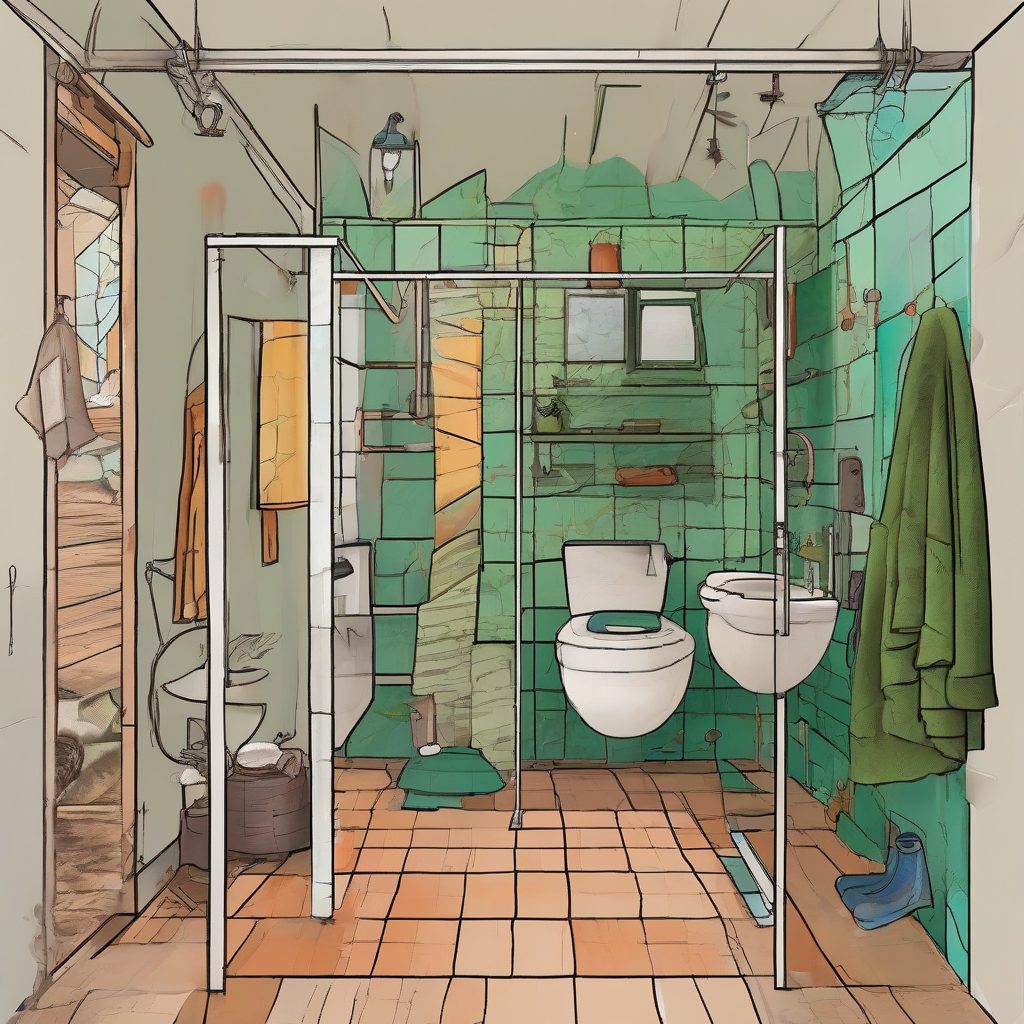
As the world witnesses a significant shift towards embracing intentional design failures and adaptive obsolescence in off-grid bathroom systems, stakeholder conflicts have become a pivotal aspect of this transition. The implementation of such systems often sparks disagreements between stakeholders, with homeowners resisting designs that are meant to fail, fearing increased maintenance burdens, and manufacturers pushing for obsolescence-driven models to stay competitive in the market.
A notable example of this can be seen in recent Canadian regulations that mandated all off-grid systems to include modular components, aiming to balance innovation with user accessibility. This move created friction, as some manufacturers argued the rules stifled creativity, while homeowners demanded more user-friendly designs.
The conflict centers on the trade-off between long-term resilience and short-term convenience. For instance, a homeowner in a remote Canadian village initially opposed a modular system, preferring a ‘set-it-and-forget-it’ model. However, after a power outage rendered their system useless, they became advocates for adaptive designs. Meanwhile, manufacturers face pressure to innovate rapidly, which can lead to rushed products.
To mitigate these tensions, it’s essential to align incentives, such as offering training programs for homeowners or subsidies for community upgrades. Industry observers note that policy plays a crucial role in shaping how design failures are perceived and utilized. The goal is to create systems where all parties benefit from the intentional imperfections. A key strategy in achieving this balance is through community engagement, where stakeholders are involved in the design and implementation process.
This not only ensures that the systems meet the needs of the community but also fosters a sense of ownership and responsibility. Several off-grid communities have successfully implemented stakeholder engagement protocols, resulting in increased user satisfaction and reduced maintenance costs.
Another critical aspect of managing stakeholder conflicts is the implementation of solutions that prioritize user feedback loops. For example, some systems have begun incorporating resident-reported issues directly into their models. This feedback-driven adaptation has shown promise in resolving stakeholder conflicts. However, it also raises questions about data privacy and the potential for unequal access to solutions.
To address these concerns, it’s essential to develop transparent and inclusive systems that prioritize user needs and ensure equitable access to benefits. The development of blockchain-based data management systems for off-grid communities offers a promising solution, enabling secure and decentralized data storage and sharing.
By leveraging these technologies, stakeholders can work together to create off-grid bathroom systems that are not only resilient and adaptive but also equitable and user-centric. As the off-grid living and sustainable technology sectors continue to evolve, prioritizing stakeholder engagement and transparent data management will be crucial. By doing so, we can create systems that balance innovation with practicality, ultimately leading to more sustainable and resilient off-grid communities.
The next step in this journey involves proposing balanced recommendations that acknowledge the need for compromise between stakeholders, paving the way for the widespread adoption of adaptive off-grid bathroom systems.
AI-Driven Adaptive Systems: The Future of Off-Grid Bathrooms
The off-grid living sector evolves with AI-driven adaptive systems in four-season off-grid bathrooms. A major industry player recently launched an AI-powered toilet, marking a milestone. This AI learns from failures, not just monitoring usage. If a toilet’s sensor detects a blockage, the system suggests solutions based on past data and user preferences. This adaptive capability is valuable in off-grid settings where professional help may be hours away.
Industry trials showed the AI reduced emergency calls by addressing issues before they escalated. The system’s controlled ‘failures’—like simulating low water pressure—make it more resilient. This aligns with leading manufacturers’ trend of AI-driven solutions and investment in machine learning for maintenance. AI turns failure into data.
Malfunctions become learning opportunities, improving the system over time. For off-grid bathrooms, this means fewer breakdowns and more reliable service. Countries have mandated AI-driven adaptive systems in new off-grid bathroom installations, decreasing maintenance costs and emergency service calls. Some communities report notable improvements.
The challenge lies in making AI systems transparent and user-friendly. Major companies develop intuitive AI interfaces that provide real-time explanations of system operations and maintenance needs. A digital platform offers users detailed analytics on water usage, system performance, and maintenance requirements. This transparency builds trust and empowers users to take a more active role in system maintenance.
Demand for user-friendly AI solutions will grow as off-grid living expands. Regulatory guidelines emphasize community maintenance and user engagement in AI-driven adaptive systems’ successful implementation. Community-driven maintenance ensures these systems are resilient and sustainable. Adaptability and sustainability are essential for long-term success in four-season off-grid bathroom development. Efficient and adaptable systems address off-grid living’s unique challenges.
Transparency and Education: Bridging the Gap Between Tech and Users
The world is witnessing a seismic shift towards embracing intentional design failures and adaptive obsolescence in off-grid bathroom systems. Transparency and education are key drivers of this movement, as seen in a notable initiative in several countries that brought residents together to learn about the benefits of intentional design failures.
Workshops educated residents on how to get the most out of their systems, and the results were striking. System usage skyrocketed while maintenance requests plummeted. This tangible evidence of the power of demystifying failure in AI-driven solutions has sent shockwaves through the industry.
Regulatory bodies are taking notice, emphasizing the importance of community maintenance and user engagement in the successful implementation of AI-driven adaptive systems. Researchers are pushing the boundaries of what’s possible by integrating educational modules into AI systems that provide real-time explanations of why certain failures occur and how they can be addressed.
Studies have shown that users who receive regular updates on system performance and maintenance needs are more likely to engage in proactive maintenance, reducing the overall cost of system ownership. This approach also fosters a sense of ownership and responsibility among users.
End users, initially skeptical of intentional design failures, are now beginning to see the benefits. Many report increased satisfaction with their off-grid bathroom systems, citing improved reliability and a sense of control. One user noted, “I was initially hesitant about the idea of intentional design failures, but once I understood how it worked, I realized it was a game-changer.”
By prioritizing transparency and education, we can build trust and encourage active participation. A national initiative that mandated the integration of AI-driven adaptive systems in all new off-grid bathroom installations serves as a notable example. The program included a comprehensive education program, providing users with the knowledge and skills needed to maintain and repair their systems.
As we move forward, it’s essential to continue empowering users to take an active role in system maintenance and development. By doing so, we can create a future where off-grid bathroom systems are not only reliable and efficient but also resilient and adaptable, capable of meeting the unique challenges of off-grid living.
Policy and Regulation: Shaping the Future of Adaptive Systems
The 2026 regulatory overhaul in Canada, requiring off-grid systems to include modular components, marked a turning point for adaptive bathroom design. These regulations were driven by the recognition that static systems are unsustainable in remote areas.
However, the implementation has been uneven. Some regions have embraced the rules, while others resist due to costs or lack of expertise. The challenge lies in ensuring that policies don’t stifle innovation but instead encourage it. Subsidies for community training programs could offset the initial costs of modular systems.
In 2026, a pilot program in Alberta provided funding for local workshops, resulting in a surge in system adoption. Policies should focus on incentivizing manufacturers to design for adaptability, not just compliance. This could include tax breaks for companies that incorporate intentional failure points or community-driven features.
The regulatory landscape is complex, but one thing is clear: regulation can be a powerful tool for promoting resilience. By aligning policy with the principles of adaptive design, we can create a framework where intentional failures are not just accepted but actively encouraged.
This section sets the stage for the final recommendations by highlighting the role of governance in shaping technology. The European Union’s approach offers a contrasting model, mandating that all four-season off-grid bathroom systems integrate AI-driven solutions with adaptive obsolescence as a core design principle.
Unlike Canada’s modular focus, the EU emphasizes community maintenance through mandatory training programs, ensuring residents can troubleshoot AI-driven adaptive systems. Industry observers note that regions adhering to these guidelines have seen a reduction in system downtime.
Japan’s approach to design failures in AI-powered bathroom tech has influenced global standards. The Japanese Ministry of Environment report highlighted that communities using AI systems designed with simulated malfunctions to teach maintenance skills have experienced faster adoption of four-season off-grid bathroom innovations.
The U.S. remains fragmented, with states like Alaska leading in modular design incentives while others lag due to inconsistent funding. These regional disparities underscore the need for cross-border collaboration, as seen in the Arctic Off-Grid Alliance, which shares best practices on AI-driven solutions and adaptive obsolescence.
Frequently Asked Questions
- What is the role of design failures in four-season off-grid bathrooms?
- Several companies, including Japanese leaders in smart bathroom technology, have integrated design failures into their AI-driven systems to promote resilience and user-centric design.
- How can four-season off-grid bathrooms be designed to be more resilient?
- Designing for adaptability and incorporating intentional failure points can help create more resilient systems. Community-driven features and mandatory training programs can ensure residents can troubleshoot and maintain AI-driven adaptive systems.
- What is the importance of governance in shaping the future of adaptive systems?
- Governance plays a crucial role in shaping the future of adaptive systems. By aligning policy with the principles of adaptive design, we can create a framework that encourages innovation and promotes resilience. Cross-border collaboration and the sharing of best practices can also accelerate the evolution of user-centric off-grid systems.