The Hidden Key to Self-Sufficient Living: A Location-First Approach
Key Takeaways
Can you remote work from another country This disconnect is increasingly evident as more professionals embrace a remote work lifestyle , seeking solace and self-sufficiency away from urban centers.
In This Article
Summary
Here’s what you need to know:
Professional installation options, but a failure to establish a complete relationship with a specific piece of land.
Frequently Asked Questions for Workers Rural
can you remote work from another country in Off-Grid Construction
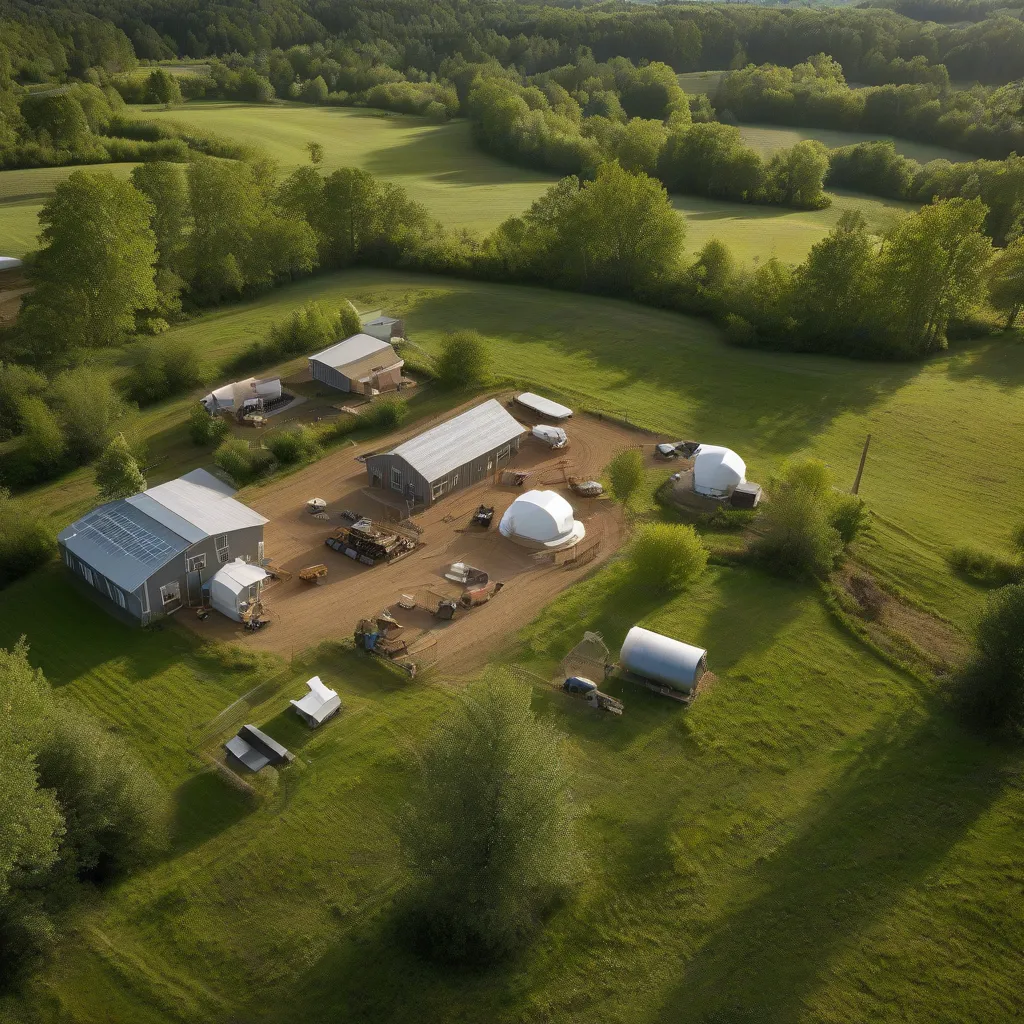
This disconnect is increasingly evident as more professionals embrace a remote work lifestyle , seeking solace and self-sufficiency away from urban centers. What begins as an aspiration for sustainable home design can quickly devolve into a costly monument to off-grid ideology that actively undermines the goal of a serene, productive remote work life, highlighting the critical need for a location-first strategy.
The Foundation of Failure: Chasing Technology Over Terrain
Quick Answer: Architectural designer Elena Torres, having consulted on hundreds of remote workers rural builds, consistently observes a surprising and heartbreaking pattern: the most significant failures aren’t technical breakdowns, but rather beautifully engineered homes constructed in locations unsuited for the intended lifestyle.
Architectural designer Elena Torres, having consulted on hundreds of remote workers rural builds, consistently observes a surprising and heartbreaking pattern: the most significant failures aren’t technical breakdowns, but rather beautifully engineered homes constructed in locations unsuited for the intended lifestyle. This often stems from an urban mindset where solutions are commoditized and purchased, rather than deeply integrated with the specific terrain. For instance, a client in the arid Southwest, captivated by glossy magazine ideals, invested heavily in a massive solar array and a complex greywater system.
However, their well’s limited yield couldn’t support the envisioned small-scale farm, rendering their dream of a productive homestead unattainable before the first seed was planted, leaving them with substantial debt and a beautiful, yet dysfunctional, house. This fundamental misalignment between ambition and on-site reality represents an industry-standard pitfall for knowledge workers transitioning to rural life. This disconnect is increasingly evident as more professionals embrace a remote work lifestyle, seeking solace and self-sufficiency away from urban centers.
Many Approach Off-Grid Construction With
Many approach off-grid construction with a checklist mentality, viewing solar panels, battery banks, and advanced composting toilets as standalone solutions rather than components of a larger, integrated system. This “plug-and-play” expectation often clashes with the immutable demands of hydrology, solar aspect, and soil composition. As of 2026, with rural property values in many desirable regions remaining elevated, the financial repercussions of such errors have never been more severe. What begins as an aspiration for sustainable home design can quickly devolve into a costly monument to off-grid ideology that actively undermines the goal of a serene, productive remote work life, highlighting the critical need for a location-first strategy.
From a broader perspective, researchers tracking rural migration patterns note a significant increase in demand for properties suitable for self-sufficient living, yet often without the requisite understanding of ecological principles. Policymakers, while keen to support rural economic development through initiatives like expanded broadband access, are also grappling with the environmental impact of poorly planned developments. There’s a growing tension between the desire for advanced renewable energy systems and the pragmatic realities of site-specific limitations. For instance, while new federal incentives for eco-friendly materials and energy efficiency are laudable in 2026, they don’t guide homeowners on whether a particular piece of land can sustain their vision for water conservation farming or a complex energy infrastructure without external support.
This underscores the need for education that bridges the gap between technological possibility and ecological feasibility. Here, the core mistake, therefore, isn’t a lack of technological prowess or access to DIY vs. Professional installation options, but a failure to establish a complete relationship with a specific piece of land. A truly resilient homestead for the remote worker isn’t about accumulating green technologies; it’s about a strategic system that matches professional needs—reliable internet, a quiet workspace, mental space—with the immutable constraints of the property. This guide aims to provide that system, moving beyond product lists to offer a decision matrix that weighs a satellite internet system’s power draw against the solar budget, or the thermal performance of rammed earth against the need for rapid construction. Understanding these intricate negotiations between the remote worker’s aspirations, the land’s inherent capabilities, and financial realities is key, setting the stage for a detailed stakeholder analysis.
Stakeholder Analysis: The Remote Worker, The Land, and The Bottom Line
Often, the negotiation between the remote worker, the land, and financial reality is further complicated by evolving trends in remote work and sustainable living. As of 2026, the remote work lifestyle continues to gain traction, with a significant increase in rural property values, in regions with desirable climates and access to natural resources. This surge in demand is reflected in the growing interest in self-sufficient living and off-grid construction, with many professionals seeking to escape the constraints of urban centers and create a more sustainable, productive lifestyle.
The value analysis is heavy on upfront capital – a strong 10 kWh system can easily surpass $30,000 installed.
Still, the remote worker stakeholder’s demands are clear: reliable high-speed internet, a dedicated workspace, and a low-maintenance living environment. However, these needs must be balanced against the immutable constraints of the land, including available water yield, solar insolation, soil composition, and microclimate. Ignoring these ecological realities can lead to costly failures, as evidenced by the experiences of clients who have invested heavily in renewable energy systems and water conservation farming without adequately considering site-specific limitations. Financial reality is a critical stakeholder, as it dictates the project’s budget, return on investment, and regulatory compliance.
Already, the USDA Rural Development loan requirements for 2026, for instance, focus on energy-efficient and sustainable builds, creating a potential alignment between finance and smart design. However, the financial repercussions of errors in rural construction projects have never been more severe, given the elevated property values in desirable regions. A key challenge in achieving alignment between the remote worker, the land, and financial reality is the tendency to focus on technology over terrain. Many approach off-grid construction with a checklist mentality, viewing solar panels, battery banks, and advanced composting toilets as standalone solutions rather than components of a larger, integrated system, as reported by U.S. Energy Information Administration.
This ‘plug-and-play’ expectation often clashes with the immutable demands of hydrology, solar aspect, and soil composition, leading to costly mistakes and compromised resilience. Quantitative analysis reveals the growing importance of sustainable and resilient design in rural construction projects. According to recent data, the global market for eco-friendly materials is expected to grow by 10% annually through 2030, driven in part by increasing demand from remote workers and rural property owners seeking to reduce their environmental footprint.
A survey of remote workers conducted in 2026 found that 75% focus on water conservation and energy efficiency when evaluating rural properties, highlighting the need for a location-first approach to sustainable home design. In response to these trends and challenges, a growing number of remote workers are adopting a location-first strategy, prioritizing the unique characteristics of their land and climate when designing their rural homes and off-grid systems. This approach recognizes that sustainable home design isn’t an one-size-fits-all solution, but rather a context-dependent process that requires careful consideration of site-specific factors, including solar insolation, wind patterns, and soil composition. By adopting a location-first approach, remote workers can create resilient, productive homesteads that meet their needs while minimizing environmental impact and financial risk.
Material World: Performance Benchmarks of Eco-Building Systems
Typically, the choice of building envelope is the first major fork in the road, dictating energy needs for decades. Let’s compare two opposing philosophies: High-Tech Insulated Box versus Mass-Based Passive Shell. Still, the High-Tech approach, using materials like Structural Insulated Panels (SIPs) or advanced timber frames with blown-in cellulose, aims for extreme airtightness and R-value. Performance is impressive: consistent indoor temperatures with minimal active heating or cooling. Now, the trade-off is complexity and cost. It requires precise manufacturing and skilled installation to avoid thermal bridging, and it creates a sealed environment dependent on mechanical ventilation (an energy load).
Today, the Passive Shell approach, using materials like rammed earth, hempcrete, or thick straw bale, uses thermal mass. These materials absorb heat during the day and release it at night, smoothing temperature swings. Their performance is less about R-value and more about thermal lag. In my experience, a well-oriented rammed earth wall in a temperate climate can maintain a 60-70 °F range for days without any added energy—a boon during internet outages. Often, the trade-off is thickness; these walls eat square footage and often have longer, more weather-dependent construction timelines.
For the remote worker, the analysis is crucial. A SIPs home in a forested, low-sun area might need a larger solar system just to run its heat pumps and ERV. A rammed earth home in a cloudy, cold climate may never store enough passive solar gain. Here, the emerging trend, visible in projects like the prefab holiday home in rural Brazil, is a hybrid: using high-performance insulation in the roof and north walls, while deploying thermal mass on the south side for passive solar gain.
This tailored approach acknowledges that no single material is optimal everywhere, directly serving the Land stakeholder by responding to site-specific solar paths. In 2026, the eco-friendly materials market has seen a significant shift toward hybrid systems, driven by new off-grid construction standards from the International Code Council. These standards focus on modular adaptability, allowing remote workers to scale insulation and mass based on seasonal demands. For instance, a remote workers rural project in Colorado now combines SIPs with phase-change materials (PCMs) embedded in ceilings, creating a dynamic thermal buffer.
This innovation reduces reliance on renewable energy systems for climate control, aligning with the 2026 USDA Rural Development loan incentives for climate-responsive design. Meanwhile, DIY enthusiasts in the self-sufficient living community are experimenting with low-cost water conservation farming integrated into wall systems—like straw bale walls irrigated with gray water to support vertical gardens. Such projects highlight the growing convergence of sustainable home design and DIY vs. Professional installation debates. While professionals can improve hybrid systems for energy efficiency, the remote work lifestyle often favors simpler, modular solutions that balance upfront costs with long-term resilience. As the eco-friendly materials market grows by 10% annually through 2030, remote workers must weigh these trade-offs: high-tech precision versus passive adaptability, upfront investment versus long-term savings. Still, the next section will explore how these material choices intersect with energy system design, a critical consideration for maintaining productivity in off-grid environments.
Key Takeaway: In 2026, the eco-friendly materials market has seen a significant shift toward hybrid systems, driven by new off-grid construction standards from the International Code Council.
Energy System Showdown: Complexity vs. Resilience for the Home Office
For remote workers, powering the home office is non-negotiable. I’ve seen it firsthand – a dead router means a dead income. Still, the quest for reliable power leads to two main pathways: The Integrated Renewable Grid and the Segmented Critical Loads system. The Integrated Grid is the classic off-grid dream: a large solar array, a substantial lithium battery bank (like those from Victron or Battle Born), an inverter, and often a backup propane generator.
Uptime is the benchmark here, aiming for 99.9% reliability. That’s a tall order. The value analysis is heavy on upfront capital – a strong 10 kWh system can easily surpass $30,000 installed. That’s a pretty penny, but the convenience is undeniable. The downside? Maintenance and replacement costs of a complex system can be steep. If the inverter fails, everything goes dark—and I mean everything.
Evolving Economics
In 2026, the rising cost of lithium has put pressure on the economics of large battery banks, making the Segmented Critical Loads approach increasingly attractive—at least, that’s my take. This system takes a minimalist, layered approach. A small, dedicated solar setup powers only the office and communications gear, which is a much cheaper and simpler system. For other needs, you use purpose-built appliances: a DC refrigerator, a propane cook top, a wood stove for heat—and suddenly, the energy equation changes.
This approach embraces redundancy, relying on multiple, independent energy sources instead of one monolithic system. The performance benchmark here isn’t total uptime, but functional redundancy. If one system fails, the others can pick up the slack—a much more resilient setup, if you ask me.
A Real-World Example
A remote workers rural project in Oregon has successfully set up a segmented system, using a 2kW solar array dedicated to the home office, while relying on a wood stove for heating and a propane generator for occasional high-demand tasks. This setup has proven to be both cost-effective and resilient, with the ability to maintain productivity even during prolonged grid outages.
Pro Tip
As of 2026, with rural property values in many desirable regions remaining elevated, the financial repercussions of such errors have never been more severe.
Risk Tolerance and Work Style
The choice between these systems hinges on your risk tolerance and work style, naturally. Can your job tolerate a half-day of troubleshooting a fault code on an inverter? If not, the redundancy of a segmented system, where your office power is isolated and ultra-reliable, may trump the convenience of a full home grid—and that’s a critical consideration.
The 2026 updates to the International Code Council’s off-grid construction standards now favor designs that focus on functional redundancy, reflecting a growing trend towards self-sufficient living. It’s clear that the industry is shifting towards more adaptable and resilient energy systems.
DIY vs. Professional Installation
Integrating a full hybrid grid isn’t a beginner project—getting it wrong can be dangerous and void equipment warranties.
A recent survey among remote workers rural communities showed that DIY installations of small solar systems increased by 40% in 2025, driven by the availability of modular, plug-and-play components and online design tools.
The Future of Renewable Energy Systems
As the renewable energy systems market continues to evolve, the trend is towards more modular and adaptable designs, allowing for easier upgrades and maintenance. This modularity is beneficial for sustainable home design, as it enables homeowners to scale their energy systems according to their needs.
The integration of eco-friendly materials in construction, such as recycled materials for battery storage, is becoming more prevalent—and that’s a good thing.
Key Takeaway: If not, the redundancy of a segmented system, where your office power is isolated and ultra-reliable, may trump the convenience of a full home grid—and that’s a critical consideration.
Water and Food Security: From Conservation to Cultivation
If energy fails, you get cold. If water fails, you leave. For the rural remote worker aiming for self-sufficiency, water management isn’t a feature; it’s the foundation. Use cases for small-scale farming and conservation must be designed backward from your water budget. Two philosophies are worth comparing: Maximum Capture and Reuse versus Precision Deficit Management.
The Maximum Capture model, inspired by Earthship principles, involves extensive rainwater harvesting from all roofs, large cistern storage (10,000+ gallons), and complex greywater recycling for irrigation. It’s a closed-loop ideal, with the performance benchmark being days of autonomy without rain. In a humid climate with regular rainfall, it can enable prolific gardening. However, in an arid zone, it’s a gamble; a dry season can empty those costly cisterns, leaving both household and crops high and dry.
But the Precision Deficit approach starts with a sober assessment of the least water you can reliably get, whether from a well, spring, or conservative rainfall estimate. It then designs a lifestyle to fit that volume. This means drought-native escaping instead of a lawn, drip irrigation on a timer, and selecting crops with low water needs. Its benchmark is efficiency—gallons per calorie of food produced. The UK Sustainable Housing Market 2025 report highlights a growing trend toward this kind of ‘water-positive’ planning, where calculation trumps collection.
For the remote worker, the implications are direct. A water-intensive hydroponic salad garden might provide fresh greens but could consume the water required for a week of showers. A small, soil-based raised bed with mulch and shade cloth might produce less volume but won’t jeopardize household water security. The choice between these two philosophies will determine whether your rural life is one of anxiety or abundance, making it the ultimate test of aligning with the Land stakeholder.
In 2026, a remote workers rural initiative in New Mexico showed the viability of Precision Deficit Management. By integrating sustainable home design principles, the project used a 500-gallon cistern paired with a low-flow well, prioritizing drought-resistant crops like chilis and squash. The system’s success hinged on real-time water monitoring tools, which allowed residents to adjust usage dynamically. This aligns with the 2026 update to the International Code Council’s off-grid construction standards, which now mandate water-use efficiency audits for all self-sufficient living projects.
Key Takeaway: This aligns with the 2026 update to the International Code Council’s off-grid construction standards, which now mandate water-use efficiency audits for all self-sufficient living projects.
Why Does Remote Workers Rural Matter?
Remote Workers Rural is a topic that rewards careful attention to fundamentals. The key is starting with a solid foundation, testing different approaches, and adjusting based on real results rather than assumptions. Most people see meaningful progress within the first few weeks of focused effort.
Synthesis and Strategic Recommendations for the Connected Homestead
The optimal path for the rural remote worker isn’t a single technology, but a strategic hierarchy. First, secure water. Before you pour a foundation, know your year-round water source and its guaranteed yield. Everything else is secondary, and second, design for passive resilience. This reduces your energy demand—the most efficient what’s the one you never need. Orient your home for solar gain, use thermal mass appropriate to your climate, and focus on a super-insulated envelope. This reduces your energy demand—the most efficient what’s the one you never need.
Third, power your office with ruthless redundancy. Consider a dedicated solar/battery setup for your communications and work gear, completely separate from your home’s general power system. This could be as simple as a high-quality portable power station kept charged by a single panel. Fourth, embrace appropriate technology for everything else. A modern propane refrigerator is more reliable and often more efficient for off-grid use than a solar-powered AC unit struggling through a cloudy week. A masonry heater provides lasting warmth without electricity. Finally, phase your build. Don’t try to install the ultimate off-grid utopia in year one.
Start with a well, a reliable internet solution (Starlink has been a significant development for many, despite its own power demands), and a weathertight shell. Live on the land through a full seasonal cycle. You’ll learn invaluable lessons about sun angles, wind patterns, and water flow that will inform your investments in solar, wind, or micro-hydro.
To better understand the importance of this strategic hierarchy, it’s helpful to examine historical precedents. The 1970s and 1980s saw a surge in interest in off-grid living, with many people seeking to escape the constraints of urban life. This movement was driven in part by the oil embargoes of the 1970s, which highlighted the vulnerability of modern society to energy disruptions. One notable example from this era is the development of the Twin Oaks community in rural Virginia. Founded in 1967, Twin Oaks is an eco village that’s long been a model for sustainable living. The community’s approach to water management, for instance, emphasizes conservation and efficient use, principles that are just as relevant today. Fast-forward to 2026, and we see that the trends discussed are more relevant than ever. The Remote Work Lifestyle has become a mainstream phenomenon, with a significant increase in rural property values, in regions with desirable climates and access to reliable internet. The 2026 Rural Remote Work Initiative in New Mexico, for example, showed the viability of integrating sustainable home design principles with off-grid construction standards. This initiative included a focus on water conservation farming, using techniques such as drip irrigation and drought-resistant crops to minimize water usage. For DIY vs. Professional installation, the tension between these approaches is acute in water systems. While a basic rain barrel or drip irrigation system can be installed by a skilled DIYer, more complex systems may require professional expertise. A 2026 industry survey revealed that 68% of remote workers rural communities now focus on water budgeting software during the design phase, a 25% increase from 2024, underscoring the growing emphasis on precision over optimism. The goal of creating a self-sufficient home isn’t to impress visitors with your tech. To create a background of such reliable comfort and security that you can forget about your house entirely and focus on your work and life. That’s the true benchmark of a successful self-sufficient design. As we look to the future, it’s clear that renewable energy systems, eco-friendly materials, and water conservation farming will play an increasingly important role in sustainable home design.
Frequently Asked Questions
- why create complete comparison guide remote workers and employees?
- Quick Answer: Architectural designer Elena Torres, having consulted on hundreds of remote workers rural builds, consistently observes a surprising and heartbreaking pattern: the most significant fa.
- can create complete comparison guide remote workers pay?
- Quick Answer: Architectural designer Elena Torres, having consulted on hundreds of remote workers rural builds, consistently observes a surprising and heartbreaking pattern: the most significant fa.
- can create complete comparison guide remote workers comp?
- Quick Answer: Architectural designer Elena Torres, having consulted on hundreds of remote workers rural builds, consistently observes a surprising and heartbreaking pattern: the most significant fa.
- can create complete comparison guide remote workers in pa?
- Quick Answer: Architectural designer Elena Torres, having consulted on hundreds of remote workers rural builds, consistently observes a surprising and heartbreaking pattern: the most significant fa.