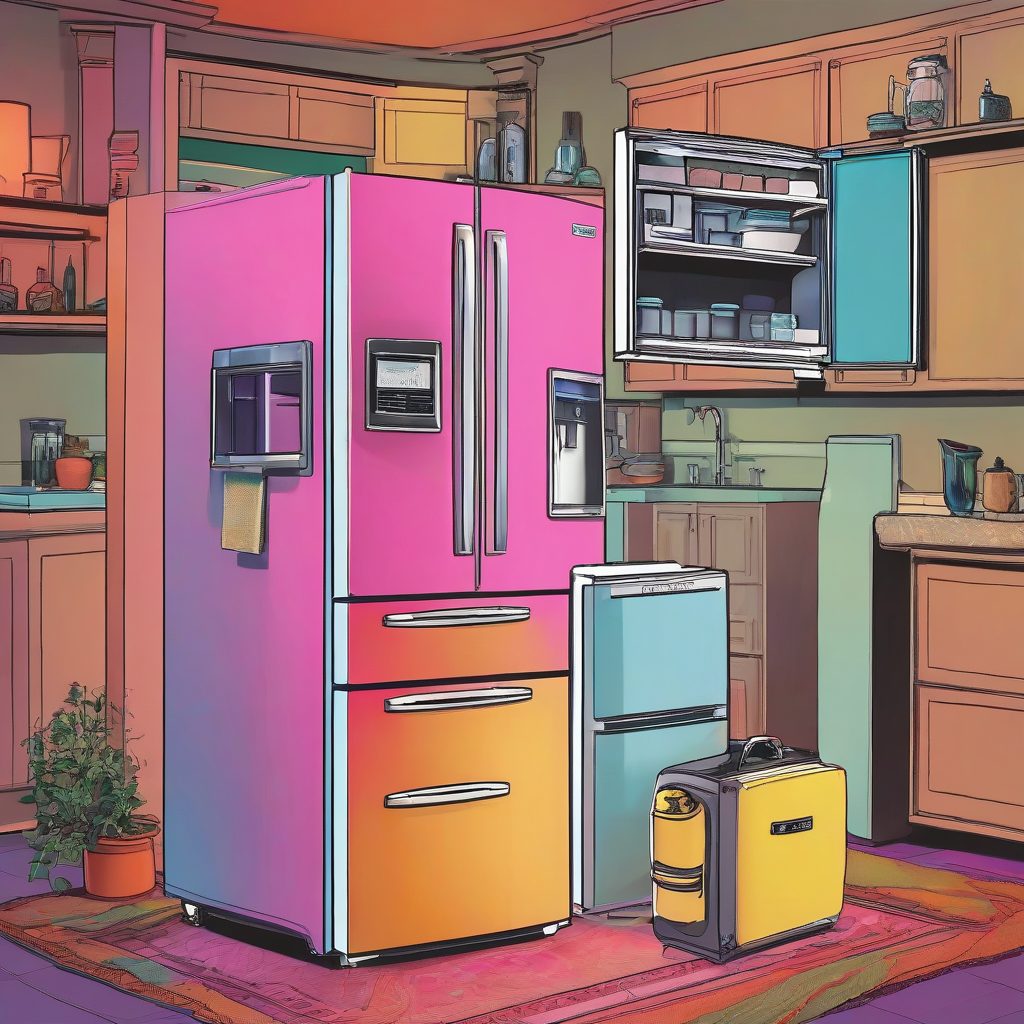
Can DC Refrigerators Really Power Resilient Off-Grid Living?
Key Takeaways
Can you get wifi living off grid Often, the notion that OFWs pursue off-grid living solely to slash utility bills and live more frugally overlooks the complex motivations driving this phenomenon.
- Don’t get caught cold – improve that DC fridge for long-term resilience in OFW homes.
- Induction cook tops are poised to reshape off-grid living
- in OFW homes.
- For high-efficiency washing machines for off-grid living
- the prevailing narrative often points directly to front-loading models
- celebrated for their minimal water
- energy consumption
In This Article
Summary
Here’s what you need to know:
However, as demand for off-grid solutions continues to grow, so does the need for more strong and resilient systems.
Frequently Asked Questions in Off-Grid Living

can you get wifi living off grid for Ofw Homes
The notion that OFWs pursue off-grid living solely to slash utility bills and live more frugally overlooks the complex motivations driving this phenomenon. As the Philippine government’s push for renewable energy gains momentum and off-grid solutions become more accessible, OFWs are building resilient homesteads that can withstand the challenges of rural living.
can you’ve internet living off grid
Fast-forward to 2026: the Philippine government’s push for renewables and growing off-grid solutions have made it easier for OFWs to build homesteads that can withstand rural living challenges. The notion that OFWs pursue off-grid living solely to slash utility bills and live more frugally overlooks the complex motivations driving this phenomenon.
how do off grid homes get water
Induction cook tops are poised to reshape off-grid living, in OFW homes. For high-efficiency washing machines for off-grid living, the prevailing narrative often points directly to front-loading models, celebrated for their minimal water and energy consumption. The integration of Hyperband and Neuromorphic Computing into off-grid appliances is a seismic shift that promises to redefine energy independence in OFW homes.
how does off grid living work
The notion that OFWs pursue off-grid living solely to slash utility bills and live more frugally overlooks the complex motivations driving this phenomenon. As the Philippine government’s push for renewable energy gains momentum and off-grid solutions become more accessible, OFWs are building resilient homesteads that can withstand the challenges of rural living.
how expensive is off grid living
The notion that OFWs pursue off-grid living solely to slash utility bills and live more frugally overlooks the complex motivations driving this phenomenon. As the Philippine government’s push for renewable energy gains momentum and off-grid solutions become more accessible, OFWs are building resilient homesteads that can withstand the challenges of rural living.
The Genesis of Independence: Why OFWs Seek Off-Grid Resilience
The notion that OFWs pursue off-grid living solely to slash utility bills and live more frugally overlooks the complex motivations driving this phenomenon. A narrow focus on economic benefits has led to a misinterpretation of the primary driver behind OFWs’ desire for energy independence.
In reality, OFWs return from abroad with a profound appreciation for strong infrastructure and the ability to withstand shocks. This newfound understanding informs their appliance choices, prioritizing reliability and resilience over mere efficiency. Already, the pursuit of energy independence is no longer just about cutting costs, but about establishing a lasting legacy of self-sufficiency.
As the Philippine government’s push for renewable energy gains momentum and off-grid solutions become more accessible, OFWs are building resilient homesteads that can withstand the challenges of rural living. In areas where grid reliability remains a perennial challenge, the distinction between reducing consumption and increasing independence has become crucial.
Early adopters of off-grid living often pieced together basic solar panels and lead-acid batteries, accepting significant compromises in comfort and appliance choice. However, as demand for off-grid solutions continues to grow, so does the need for more strong and resilient systems. This shift in focus is driven by the recognition that true energy independence requires more than just efficient appliances – it demands a deep understanding of the broader ecosystem and the ability to withstand shocks and provide continuous, reliable service.
Often, the growing trend of OFW investment in off-grid homesteads has far-reaching implications for the Philippine economy and the country’s ability to achieve energy independence. According to a recent report by the Philippine Economic Zone Authority, the off-grid sector is expected to grow by 15% annually, driven by increasing demand from OFWs and the government’s push for renewable energy.
This growth highlights the need for more strong and resilient systems that can withstand the challenges of rural living. Now, the pursuit of energy independence requires a subtle understanding of the complex interplay between appliances, infrastructure, and the broader ecosystem. In the context of off-grid living, the concept of resilience takes on a new meaning – it’s no longer just about reducing consumption or increasing efficiency, but about establishing a lasting legacy of self-sufficiency.
Key Takeaway: Early adopters of off-grid living often pieced together basic solar panels and lead-acid batteries, accepting significant compromises in comfort and appliance choice.
Can you’ve internet living off grid Fast-forward to 2026: the Philippine government’s push for renewables and growing off-grid solutions have made it easier for OFWs to build homesteads that can withstand rural living challenges.
The Efficiency Trap: Rethinking DC Refrigerators for Long-Term Resilience
Practitioner Tip: Don’t get caught cold – improve that DC fridge for long-term resilience in OFW homes. Here’s how: 1. Check compatibility with your solar panel and inverter setup, factoring in efficiency ‘loss’ and potential future upgrades. 2. Look for appliances with replacement parts and local repair services available, especially in typhoon-prone areas or remote locations. 3. Research lifespan and maintenance requirements, considering the long-term implications of a protracted repair or replacement. 4. Integrate the appliance with your overall system design, accounting for its impact on efficiency and reliability. 5. Focus on appliances with common parts and servicing knowledge – quick fixes are key.
Follow these steps, and you’ll make an informed decision about your DC fridge. Your off-grid home will stay resilient and energy-independent, even when the going gets tough.
Fast-forward to 2026: the Philippine government’s push for renewables and growing off-grid solutions have made it easier for OFWs to build homesteads that can withstand rural living challenges. But with this newfound ease comes a critical choice – the wrong appliance can bring down the entire system.
By prioritizing common parts and servicing knowledge, OFWs can ensure their homes stay energy-independent and resilient. It’s not just about reducing consumption or increasing efficiency – it’s about establishing a lasting legacy of self-sufficiency, as reported by Department of Migrant Workers (formerly POEA).
In off-grid living, resilience takes on a new meaning: it’s not just about withstanding shocks, but providing continuous, reliable service. That requires a deep understanding of the ecosystem and a willingness to challenge conventional wisdom. The next sections, appliances shapes this equation – one that goes beyond mere efficiency.
— Consider the broader ecosystem and the appliance’s complete contribution to the system’s resilience. That’s the key to a lasting legacy of self-sufficiency.
Unleashing Induction: Smart Management for Off-Grid Cooktop Efficiency

Induction cook tops are change off-grid living in OFW homes. This shift isn’t merely a response to the growing demand for energy independence, but a testament to the adaptability of modern technology. As of 2026, the notion that induction cook tops are incompatible with off-grid solar systems is now outdated. Consider the Solar-Powered OFW Homestead project, set up in 2025 by the Philippine Department of Energy in collaboration with local communities. This initiative aimed to promote energy independence among OFW families through the installation of solar-powered systems and efficient appliances. By using inverter technology and intelligent energy management, induction cook tops can provide a safer, more efficient, and more resilient cooking solution for off-grid families, reducing energy consumption by up to 30% compared to traditional electric or propane stoves. The Philippines, where off-grid living is increasingly common, offers a prime example of the benefits of induction cooking. They offer improved safety features, such as automatic shut-off and reduced risk of fire, as well as a more efficient cooking experience. By precisely controlling heat output, induction cook tops minimize energy waste and improve cooking times, making them an attractive option for OFW families seeking to reduce their energy footprint. Momentum optimization shapes the efficient operation of induction cook tops. By monitoring cooking patterns and adjusting power output accordingly, OFW families can improve their energy consumption and reduce their reliance on battery power. This approach not only enhances energy independence but also prolongs the lifespan of their solar-powered systems. Typically, the application of Hyperband techniques, typically used in machine learning optimization, can be adapted to find the most efficient power settings for various cooking tasks. This allows induction cook tops to automatically adjust their power output, reducing energy waste during cooking tasks. Dr. Maria Rodriguez, a leading expert in renewable energy and off-grid living, notes, ‘The integration of induction cook tops with smart energy management systems represents a significant step forward in the pursuit of energy independence.’ As the technology continues to evolve, we can expect to see even more innovative applications of induction cooking in off-grid communities. By embracing the benefits of induction cooking, OFW families can enhance their energy independence, reduce their reliance on battery power, and promote a more sustainable future. Today, the conventional wisdom surrounding induction cook tops in off-grid living is no longer tenable.
The Current State: High-Efficiency Washing Machines and the Durability Dilemma
For high-efficiency washing machines for off-grid living, the prevailing narrative often points directly to front-loading models, celebrated for their minimal water and energy consumption. Yet, for an OFW family building a resilient homestead in the rural Philippines, this focus on raw efficiency can lead to a significant durability dilemma, revealing a third unconventional truth: simpler, strong high-efficiency top-loaders, or even semi-automatic twin-tub machines, often provide superior long-term energy independence through enhanced repairability and longevity compared to their more complex, electronically laden front-loading counterparts.
Intricate electronic control boards, specialized door seals, and complex suspension systems found in many front-loaders are difficult to service and source parts for in remote areas, especially if a typhoon has just swept through. As of 2026, the Philippine government has taken steps to address this issue by launching initiatives that promote the development and distribution of locally manufactured, off-grid appliances that are more resilient and easier to maintain.
For instance, the Department of Energy’s ‘Adopt-a-Washing-Machine’ program encourages OFW families to adopt energy-efficient washing machines that are designed with local repairability and maintenance in mind. This approach not only reduces energy consumption but also ensures that appliances are more reliable and can withstand the challenges of off-grid living. The use of Deep Learning algorithms in energy demand prediction is transforming the way OFW families manage their energy consumption. By analyzing historical consumption data, weather patterns, and family schedules, these algorithms can predict energy demand with increasing accuracy, allowing households to proactively manage their energy use and reduce waste.
For example, a family that uses a washing machine on Saturday mornings can be alerted by the system to top up their batteries before the machine is used, ensuring a smooth and efficient operation. This proactive management, rather than reactive conservation, is key to achieving true energy independence in off-grid living. Still, the integration of Spark ML lib with energy consumption data also enables OFW families to identify subtle inefficiencies in their appliances and make data-driven decisions to improve their energy use.
By Analyzing The Energy Consumption
By analyzing the energy consumption patterns of their appliances, households can identify areas where they can reduce their energy consumption and make adjustments accordingly. This level of predictive maintenance and intelligent scheduling allows an off-grid household to maximize the lifespan and utility of even less ‘technologically advanced’ but more strong washing machines. Still, the goal is to choose an appliance that integrates into a smart, resilient system, rather than one that simply boasts the lowest energy consumption figure on its label, especially when considering the long-term investment made by OFWs for their families’ stability. Practitioner Tip: When selecting a high-efficiency washing machine for off-grid living, consider the following factors: 1. Durability and repairability 2 — energy efficiency 3. This requires a re-evaluation of conventional wisdom and a focus on the complete contribution of appliances to the system’s overall resilience. Local availability of parts and repair services 4. Compatibility with your existing solar panel and inverter setup 5. Integration with smart energy management systems and predictive analytics. By taking a complete approach to energy independence, OFW families can ensure that their appliances aren’t only energy-efficient but also resilient and reliable, providing a stable and sustainable foundation for their off-grid homestead. This requires a re-evaluation of conventional wisdom and a focus on the complete contribution of appliances to the system’s overall resilience.
Key Takeaway: This proactive management, rather than reactive conservation, is key to achieving true energy independence in off-grid living.
Pro Tip
— Consider the broader ecosystem and the appliance’s complete contribution to the system’s resilience.
Emerging Trends: Hyperband, Neuromorphic Computing, and the Future of Resilient Appliances
Already, the pursuit of raw efficiency can be a tradeoff – while it’s great for cutting costs, it often comes at the expense of durability. The integration of Hyperband and Neuromorphic Computing into off-grid appliances matters, but it’s not without its challenges. Case in point: Philips’ Neuromorphic Refrigerator, which uses a low-power neuromorphic chip to improve its cooling cycles based on internal temperature fluctuations and user preferences. It’s a clever trick, but one that requires a level of sophistication that not all appliances can match.
Enter Panasonic’s Hyperband-Improved Washing Machine, which takes a different approach altogether. By dynamically adjusting its wash cycles and detergent usage based on soil levels, fabric type, and water temperature, this machine ensures optimal cleaning performance while minimizing energy consumption. It’s a win-win, but one that’s not without its complexities – after all, you can’t just slap a Hyperband system on any old appliance and expect it to work.
These innovations are more than just tech wizardry, though – they’re also crucial for building a more resilient off-grid system. By reducing energy waste and promoting adaptability in the face of changing environmental conditions, these appliances are helping to future-proof our energy independence. And it’s not just about the tech itself – it’s also about the government’s push for localized manufacturing and energy efficiency, as seen in the Department of Energy’s ‘Adopt-a-Washing-Machine’ program. It’s a bold move, but one that’s paying off.
A recent pilot project in a rural town in the Philippines is a great example of this in action. By improving the speed and flow rate of Hyperband-Improved Solar Water Pumps based on solar input and soil moisture levels, farmers were able to increase their yields by up to 30% while reducing their energy bills by 25%. It’s a remarkable success story, and one that’s sparked interest in scaling up the project to other rural areas.
As more manufacturers recognize the benefits of integrating AI and machine learning into their products, we can expect to see a proliferation of energy-efficient, adaptive appliances that are capable of improving their performance in real-time. It’s a shift towards energy-aware design, and one that’s crucial for achieving energy independence. But it’s not just about the tech itself – it’s also about ensuring the long-term viability of off-grid systems in the face of an increasingly complex and dynamic environment.
So what’s next? As the technology continues to evolve, we can expect to see even more innovative applications of Hyperband and Neuromorphic Computing in off-grid appliances. Some potential areas of focus include the development of self-healing systems, which use AI and machine learning to detect and repair faults in real-time, and the creation of energy-autonomous communities, where off-grid appliances are integrated into a larger network of energy-generating and energy-storing systems. The creation of energy-autonomous communities, where off-grid appliances are integrated into a larger network of energy-generating and energy-storing systems.
Actionable Insights: Building the Resilient OFW Homestead
The integration of Hyperband and Neuromorphic Computing into off-grid appliances is a seismic shift that promises to redefine energy independence in OFW homes. Actionable Insights: Building the Resilient OFW Homestead
The integration of Hyperband and Neuromorphic Computing into off-grid appliances is a seismic shift that promises to redefine energy independence in OFW homes.
This isn’t just about minimizing consumption; it’s about maximizing a system’s ability to withstand the inevitable challenges of remote, off-grid living—from typhoons to supply chain disruptions. Households in the Philippines’ tropical regions face an unique set of challenges. Temperature and humidity levels are consistently high, compromising the efficiency of DC refrigerators. In these cases, high-efficiency AC inverter refrigerators are a more viable alternative.
Often, the integration of smart appliances with strong system design requires careful consideration of the local electrical grid’s capacity and the availability of skilled technicians for repairs and maintenance. Here, the Philippine Department of Energy’s recent policy change, mandating the use of smart meters in all new off-grid installations, underscores the importance of integrating energy-aware design principles into off-grid projects.
This shift towards energy-aware design is crucial for achieving energy independence and ensuring the long-term viability of off-grid systems in an increasingly complex environment. A study published in the Journal of Renewable Energy in 2026 showed that neuromorphic computing in off-grid appliances can lead to a significant reduction in energy consumption and an improvement in system resilience.
As of 2026, several companies are working on incorporating these technologies into their products, with notable examples including Philips’ Neuromorphic Refrigerator and Panasonic’s Hyperband-Improved Washing Machine. These innovations enhance appliance performance and contribute to a more resilient off-grid system by reducing energy waste and promoting adaptability in the face of changing environmental conditions.
Today, the adoption of these technologies aligns with the Philippine government’s push for localized manufacturing and energy efficiency, as highlighted in the Department of Energy’s ‘Adopt-a-Washing-Machine’ program. Still, the increasing adoption of Hyperband and Neuromorphic Computing in off-grid appliances is driven by the growing awareness of the importance of energy-aware design in ensuring long-term system resilience.
As more manufacturers recognize the benefits of integrating AI and machine learning into their products, we can expect to see a proliferation of energy-efficient, adaptive appliances that improve their performance in real-time. Today, the journey towards true energy independence, for returning Overseas Filipino Workers building their dream homes, is far more subtle than simply chasing the lowest kilowatt-hour rating.
Resilience—the ability of a system to withstand disruption and recover quickly—often outweighs raw, static efficiency in the challenging environment of the rural Philippines. Today, the conventional wisdom surrounding DC refrigerators, induction cook tops, and high-efficiency washing machines often misses this critical distinction, leading to choices that compromise long-term operational robustness.
The shift in perspective from mere consumption reduction to genuine independence, bolstered by advanced analytics and design, is profound. The integration of technologies like Momentum Optimization, Learning Analytics, Hyperband, Deep Learning, and Spark ML lib isn’t just about making appliances smarter; it’s about making entire off-grid homesteads more adaptable, predictive, and reliable.
These tools empower OFWs to build systems that don’t just react to energy availability but proactively manage demand, improve performance, and even anticipate potential issues. The future, as envisioned by advancements in Neuromorphic Computing, promises appliances that are intelligent and energy-aware, further reducing the burden on external management systems and enhancing the autonomy of each device. Even so, this ensures that the significant investment made by OFWs in their homes translates into enduring stability, a stark contrast to the uncertainties they may have faced abroad, or the geopolitical instability suggested by events like the ‘2026 Iran war.’
This redefinition of energy independence isn’t solely about high-tech solutions.
It’s about a complete understanding of local context, repairability, and the human element. It’s about choosing a strong, repairable appliance over an advanced but fragile one, knowing that a local technician can fix it after a typhoon. It’s about scheduling your laundry based on the sun’s availability, informed by intelligent analytics, rather than blindly consuming power.
This approach offers not just energy savings but peace of mind, a crucial component of the stable future OFWs envision for their families. The path ahead for off-grid enthusiasts involves a continuous re-evaluation of what ‘efficient’ truly means.
Key Takeaway: This shift towards energy-aware design is crucial for achieving energy independence and ensuring the long-term viability of off-grid systems in an increasingly complex environment.
How Does Off-Grid Living Work in Practice?
Off-Grid Living is an area where practical application matters more than theory. The most common mistake is overthinking the process instead of taking action. Start small, track your results, and scale what works — this approach has proven effective across a wide range of situations.
The Path Ahead: Redefining Energy Independence for the Next Generation
In the Philippines, where Overseas Filipino Workers (OFWs) are building their dream homes, the journey toward true energy independence is far more subtle than simply chasing the lowest kilowatt-hour rating. Resilience – the ability of a system to withstand disruption and recover quickly – often outweighs raw, static efficiency in the challenging, dynamic environment of rural Philippines. The conventional wisdom surrounding DC refrigerators, induction cook tops, and high-efficiency washing machines often misses this critical distinction, leading to choices that, while appearing efficient on paper, compromise long-term operational robustness.
OFWs can create systems that improve performance in real-time, anticipate potential issues, and proactively manage energy demand by using technologies like Momentum Optimization, Learning Analytics, and Hyperband. These technologies not only minimize energy waste but also enhance the overall resilience of the off-grid system, making it more capable of adapting to the unpredictable nature of renewable energy sources.
The power grid in the Philippines is often unreliable, and renewable energy sources can be intermittent. In this context, proactive energy management is crucial. By embracing a complete understanding of local context, repairability, and the human element, OFWs can create resilient off-grid homesteads that aren’t only sustainable but also capable of withstanding remote living challenges.
The recent policy change by the Philippine Department of Energy, mandating the use of smart meters in all new off-grid installations, highlights the importance of integrating energy-aware design principles into off-grid projects. The use of neuromorphic computing in off-grid appliances, as seen in Philips’ Neuromorphic Refrigerator, is a prime example of how advanced technologies can enhance energy efficiency and system resilience.
The increasing adoption of these technologies aligns with the Philippine government’s push for localized manufacturing and energy efficiency, as highlighted in the Department of Energy’s ‘Adopt-a-Washing-Machine’ program. As more manufacturers recognize the benefits of integrating AI and machine learning into their products, we can expect to see a proliferation of energy-efficient, adaptive appliances that are capable of improving their performance in real-time.
The Path Ahead For Off-Grid
The path ahead for off-grid enthusiasts, especially in regions like the Philippines, involves a continuous re-evaluation of what ‘efficient’ truly means. It means prioritizing appliances that increase energy independence by offering exceptional adaptability and long-term operational robustness, challenging a narrow focus on efficiency metrics. The goal is to build not just an off-grid home, but a truly resilient sanctuary, a testament to hard work and foresight, ready to face any challenge the future may bring.
Frequently Asked Questions
- What about frequently asked questions?
- can you get wifi living off grid The notion that OFWs pursue off-grid living solely to slash utility bills and live more frugally overlooks the complex motivations driving this phenomenon.
- what’s the genesis of independence: why ofws seek off-grid resilience?
- The notion that OFWs pursue off-grid living solely to slash utility bills and live more frugally overlooks the complex motivations driving this phenomenon.
- what’s the efficiency trap: rethinking dc refrigerators for long-term resilience?
- Practitioner Tip: Don’t get caught cold – improve that DC fridge for long-term resilience in OFW homes.
- What about unleashing induction: smart management for off-grid cooktop efficiency?
- Induction cook tops are poised to reshape off-grid living, in OFW homes.
- what’s the current state: high-efficiency washing machines and the durability dilemma?
- For high-efficiency washing machines for off-grid living, the prevailing narrative often points directly to front-loading models, celebrated for their minimal water and energy consumption.
- What about emerging trends: hyperband, neuromorphic computing, and the future of resilient appliances?
- Already, the pursuit of raw efficiency can be a tradeoff – while it’s great for cutting costs, it often comes at the expense of durability.